National Neuroscience Institute will NEVER ask you to transfer money over a call. If in doubt, call the 24/7 ScamShield helpline at 1799, or visit the ScamShield website at www.scamshield.gov.sg.
NNI Neuroradiology department has developed an MRI-safe monitoring system to alert staff if patients with dementia leave the clinic unaccompanied. The team behind the project has showcased the system at major health technology exhibitions to highlight the safety benefits and possibilities for future commercialisation.
On 17 September 2025, a patient with a history of dementia was reported missing at the Neuroradiology department at NNI@TTSH. Although worrying, staff had a critical piece of information at their fingertips: no exit alert had been triggered by the clinic's newly deployed patient monitoring system, therefore the patient was still in the vicinity. Within five minutes, he was found safe at another waiting area within the clinic.
This was the real-world debut of an MRI-safe RFID alert system developed by four staff from the NNI Neuroradiology Department — and it worked exactly as intended, just one week after it was installed.
Every month, the Neuroradiology department performs more than1500 brain scans to help diagnose and monitor brain and nerve conditions such as Alzheimer's disease, brain tumours and multiple sclerosis. Confusion and memory difficulties are common in patients with such conditions, and the risk of outpatients wandering off or leaving the clinic without a proper handover to caregivers is a genuine safety concern.
"Our department is designed to be a calming space, but it is still an unfamiliar environment for patients, and this can cause confusion and disorientation for those living with dementia and cognitive impairment," says Cycilia Kan, Principal Radiographer. "Therefore, we wanted to create a system that would raise an alert if a patient left the clinic unaccompanied, to help us find them as soon as possible."
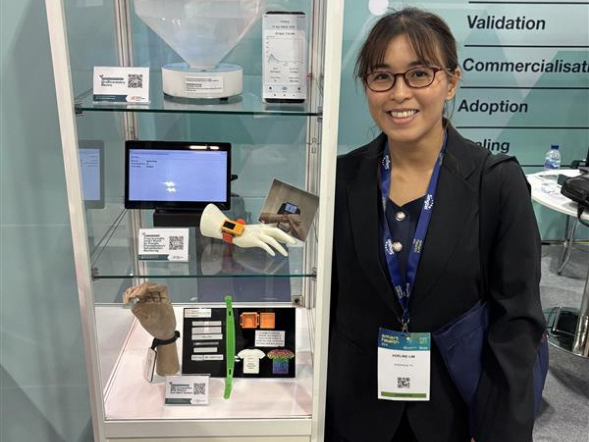
Cheng Qianhui, Manager, Neuroradiology at Smart Health Asia 2026
The challenge was to develop something safe, effective, easy to disinfect and implement on the ground.
MRI machines have powerful magnets, so any solution had to be entirely metal-free. The contact tracing tags worn by inpatients were not an option as they contain metallic components and must be removed before patients enter the MRI environment. Supported by a $15,000 NNI Brain Tank Innovation Grant, the team worked with a local technology company and developed an alert system using MRI-safe radio frequency identification (RFID) tags and readers.
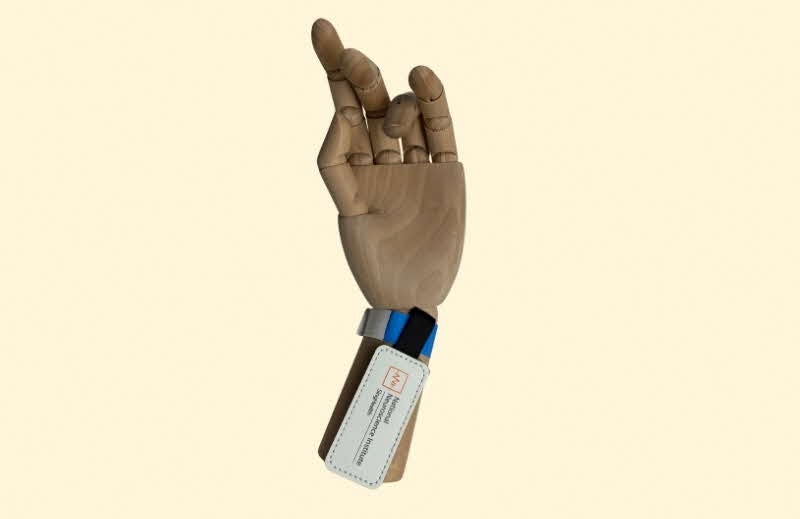
“Upon registration, each outpatient is now issued with a lightweight RFID tag worn on their wrist throughout their visit, including during MRI scans,” says Eileen Ng, Principal Radiographer. “The tag is only removed at the end of the visit, when staff pass the patient over to their caregiver.”
Lightweight RFID tag worn on each outpatient's wrist throughout their visit at the Neuroradiology department at NNI@TTSH, including during MRI scans
RFID readers positioned at exit points within the clinic immediately trigger an alarm if a patient attempts to leave unaccompanied, alerting staff to intervene promptly.
"This system gives us, our patients and their families an added layer of assurance that patients are safe throughout their time with us," said Oh Hui Ping, Senior Principal Radiographer.
For the NNI Neuroradiology team, the ambition goes beyond their own clinic walls. Having proven that a simple, low-cost innovation can meaningfully improve patient safety, they hope other radiology departments across Singapore and beyond will follow suit.
The team has been sharing their work at major healthcare technology exhibitions including HIMSS26 APAC Health Conference & Exhibition and Smart Health Asia 2026 and is actively seeking healthcare institutional partners to help bring the system to more patients.
"Patient safety is at the heart of everything we do,” says Cheng Qianhui, Manager, Neuroradiology. “We hope this system can give other departments and their patients' families the same added layer of assurance that it has given us.”



















 HealthXchange
 Health Videos


